
24/7 Emergency Line Open
Home › Services › Slab Leak Detection & Repair
Emergency Slab Leak Detection | Under the Floors of Levittown, PA Homes
Water under a concrete floor does not leave a puddle you can mop. It leaves a warm patch, a swollen baseboard or a bill that makes no sense. Plumbers sent from this line confirm the leak at the meter, locate it under the slab, and explain the repair options before anyone breaks a floor.
Call (833) 840-2034- Licensed and insured plumbers
- Same-day service when available
- 24/7 emergency dispatch
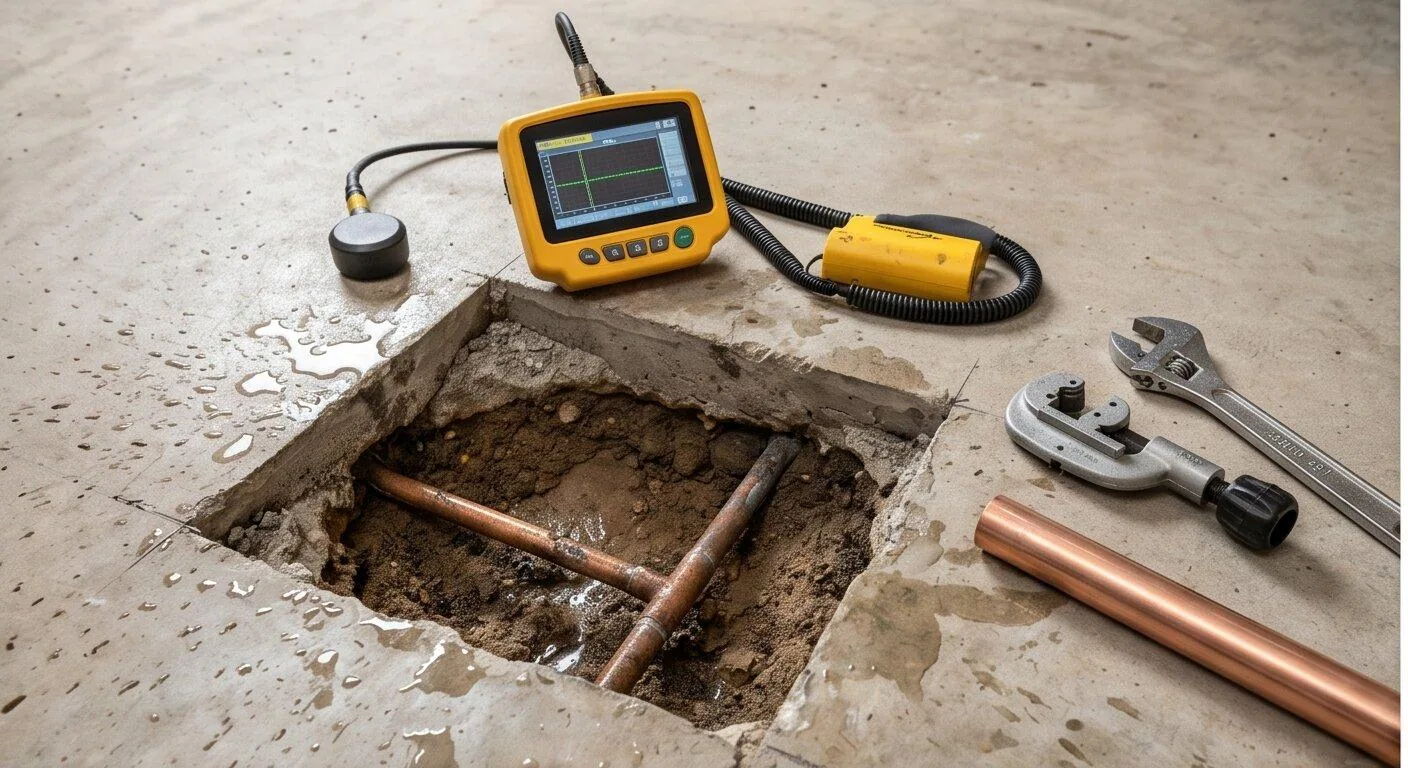
Signs a slab leak is under your floor
Most slab leaks announce themselves quietly. The pipes are hidden, so the first clues come from the floor, the meter and your ears. If more than one of these is true, treat it as a leak until a plumber says otherwise.
- A floor that feels warm in one spot, which can mean a hot line is leaking beneath it
- Damp carpet or wet tile near an outside wall, even on dry days
- A hissing or trickling sound with every fixture closed
- A meter dial that keeps turning when the house is quiet
- A baseboard that swells, discolors or pulls away from the wall
- Low hot water pressure with no fixture problem to explain it
You can confirm the loss yourself in ten minutes. Close every tap, turn off the ice maker and the washing machine, and read the meter. Wait, then read it again. A change means water is leaving the system, and the plumber can use your two readings to decide where to start.
Locating the leak before anyone cuts concrete
Finding the exact spot is what separates a small repair from a large one. A plumber starts by isolating the water lines, closing valves one section at a time to learn which run is losing pressure. That narrows a whole house of pipe down to a single line.
Next comes listening. Acoustic equipment placed on the floor picks up the sound of pressurized water escaping, and the plumber walks the line, marking where the sound is strongest. Thermal imaging adds a second view when a hot line is the problem, since warm water spreading under a floor shows as a bloom on the camera. Electronic locators trace the pipe path itself so the marks line up with where the pipe really runs.
A good locate ends with chalk marks on the floor and a clear explanation. You should be told which line leaks, how deep it is likely to be and what each repair route would disturb. If the plumber cannot say where the leak is, that is a reason to ask for a second reading before any cutting begins.
Warm floor or a meter that will not rest?
Those are the two clues plumbers trust most. Call, describe them, and a plumber heads your way with locating equipment.
Call (833) 840-2034 Contact details ›Repair options once the leak is located
Three ways to fix a leak in a slab line
There is no single right answer. The best repair depends on the pipe, the age of the system and how many times it has failed. A single pinhole on an otherwise sound line is a different situation than a line that has leaked twice in a few years.
| Repair route | How it works | Best when | What to weigh |
|---|---|---|---|
| Tunnel under the slab (trenchless) | A small excavation reaches the pipe from the side or below, leaving the floor above untouched | One leak on an otherwise healthy line | Outdoor digging and soil restoration |
| Reroute overhead | The leaking run is retired and a new line goes through walls or the attic | Several leaks, or a line in poor condition | Some wall patching and a new pipe route |
| Epoxy lining | A coating is flowed through the pipe to seal it from inside | Sound pipe with small, early failures | Not suited to every pipe or every fitting |
Slabs poured with post-tension cables need a scan before anyone cuts, since a cut cable is a structural problem. Cutting through the floor directly above the leak is a fourth option and is usually the last resort. It is faster to explain but the most disruptive, since tile, flooring and the slab itself have to be repaired afterward.
A repair is not the same as a repipe
When a line has failed more than once, the question shifts from how to patch it to whether the whole run should be replaced. One more patch is weighed against a fresh line on the page about replacing the whole run. For a slab leak specifically, ask the plumber whether other runs under the floor are the same age and material, since they often wear at the same pace.
What a slab leak does to concrete and floors
Water that keeps escaping beneath a slab can wash soil away from under the concrete and soak whatever sits on top of it. The floor covering is usually the first thing to show harm. Wood buckles, tile loosens from its bed, and carpet pads hold moisture that breeds odor. Over a long period, soil that has been washed out can leave a void under the slab, and a crack in the concrete is a sign worth reporting to the plumber.
That is why speed matters even when the leak looks small. The cost of waiting is less about the pipe and more about what the water reaches while you decide. A plumber who sees evidence of soil movement or a spreading crack will say so plainly and may suggest a structural opinion before any repair begins.
Not sure it is the slab?
A plumber can confirm it or rule it out with a meter test and listening gear. Call and describe what you see.
Call (833) 840-2034 Contact details ›Levitt houses and slab plumbing
Per the Courier Times, the first Levittown houses went up slab-on-grade without basements, and radiant heating lines of copper ran through the floor. So in one of these homes, any line below floor level, the heating loop included, can be the source of a slab leak. Mention the age and layout of your house when you call so the dispatcher sends equipment that can read through concrete.
If your home is a later build or has been added onto, the foundation under the addition may differ from the original. The plumber will ask which part of the house the symptoms come from and plan around it.
Source: Bucks County Courier Times via AOL.
Paperwork after a slab leak
If you plan to file a claim, the plumber is a useful witness. Ask for a written note of the location, the cause and the repair route, and keep the photos of damage you took before cleanup. Whether a policy covers the leak or only its damage is a question for your insurer, and a plumber will not decide it for you.
For general leak questions that are not tied to a slab, such as a wall stain or a high bill with no floor symptoms, the general leak detection page is the better starting point.
Slab leak questions, answered
Do I need a plumber for a slab leak, or can I fix it myself?
A slab leak needs a plumber. The pipe sits under or inside concrete, so finding it takes acoustic or electronic equipment, and fixing it means working through the floor or rerouting the line. What you can do yourself is protect the house. Close the main shutoff if water is surfacing, move belongings off the floor and note when the meter last held still, so the plumber starts with real information.
What does a slab leak look like?
Rarely like a pipe at all. You may see a damp or warm patch on tile or vinyl, a baseboard that swells, carpet that stays wet near an outside wall or a crack that seems to be leaking. Some homeowners hear a faint hiss at night. A wet spot that returns after drying is a strong hint that water is rising from below.
What is the difference between a tunnel, a reroute and an epoxy repair?
A tunnel repair digs beneath the slab to reach the pipe without breaking the floor above. A reroute abandons the leaking line and runs a new one through the attic, walls or ceiling. An epoxy repair coats the inside of the pipe to seal it. The plumber picks among them based on pipe condition, how many leaks the line has had, and how much of the floor you are willing to disturb.
What are the earliest warning signs of a slab leak?
A bill that climbs while household habits stay the same, a meter that moves when everything is off, and a floor that feels warm underfoot are the three most common. Sounds matter too. Running or hissing water when the house is quiet often comes before any stain appears. If you notice two of these together, call before the damage reaches the flooring.
Get a plumber to the leak under your floor
One call opens the file. Say what you have noticed and the dispatcher sends someone who can locate it.
Call (833) 840-2034 Contact details ›- Licensed and insured plumbers
- Same-day service when available
- 24/7 emergency dispatch