24/7 Emergency Line Open
Home › Services › Tankless Water Heater
Tankless Water Heater Help | Install, Repair and Flush Service for Levittown, PA Homes
Hot water that never runs out sounds simple until the unit throws an error code, goes lukewarm or stops firing. A plumber sent from this line installs, repairs and descales tankless units, and tells you plainly when the symptom points at the unit and when it points at the supply.
Call (833) 840-2034- Licensed and insured plumbers
- Same-day service when available
- 24/7 emergency dispatch
Tankless repair and troubleshooting
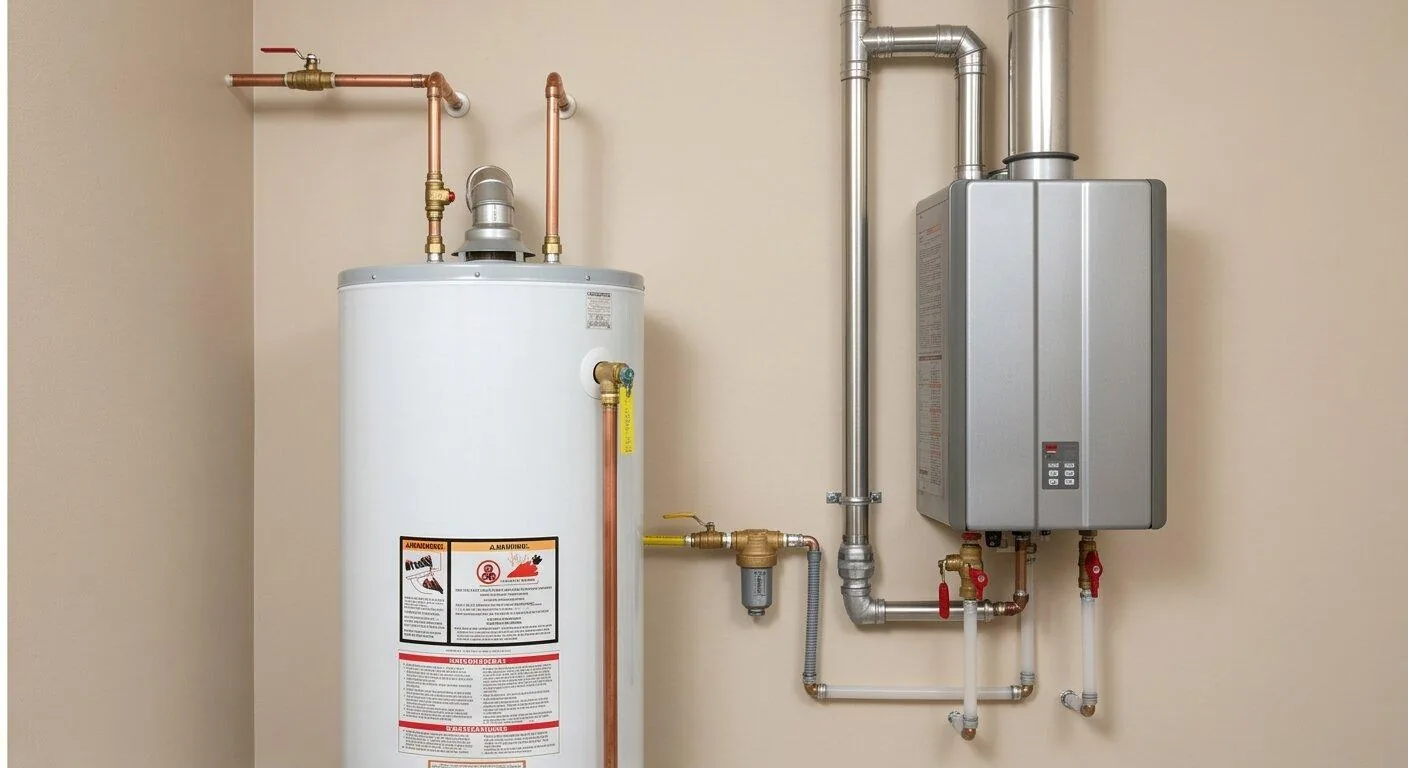
A tankless unit gives few warnings before it stops, so the symptoms are worth learning. Most fall into a handful of groups, and each points at a different part of the system.
| Symptom | Common cause | First check |
|---|---|---|
| Error code on the display | Ignition, flame, vent or sensor fault | Note the code and unit model before calling |
| Hot water turns lukewarm mid-shower | Flow too low to trigger, or scale in the exchanger | See if a single fixture stays steady |
| No hot water at all | No gas, no power, a tripped vent switch or a closed valve | Confirm the gas valve and power are on |
| Cold sandwich between hot bursts | Short runs of off-and-on use | Run the tap longer, then compare |
| Banging or kettle noise | Scale built up inside the heat exchanger | Ask about a flush |
Do not open the cabinet on a gas unit to chase a code. A plumber reads the fault history, tests the burner and vent, and replaces the part that failed instead of guessing at it.
Installation: what the job involves
Installing a tankless unit is a project, not a swap. The unit mounts on a wall, so the plumber chooses a location that suits the vent, the gas line and the water connections. Several items need attention before the unit is hung.
- Gas line size, because a tankless burner draws far more at once than a tank
- A vent route that meets the manufacturer instructions, often through the wall
- Condensate drainage for high-efficiency models
- Isolation valves so the unit can be flushed later
- A relief valve and a drain, plus power for the controls
- Electrical capacity for electric models, which can demand heavy wiring
If the gas line has to be upsized, the gas line work is part of the same visit planning.
Tankless unit acting up?
Give the model and the symptom to the dispatcher, who sends a plumber able to test the unit and the supply together.
Call (833) 840-2034 Contact details ›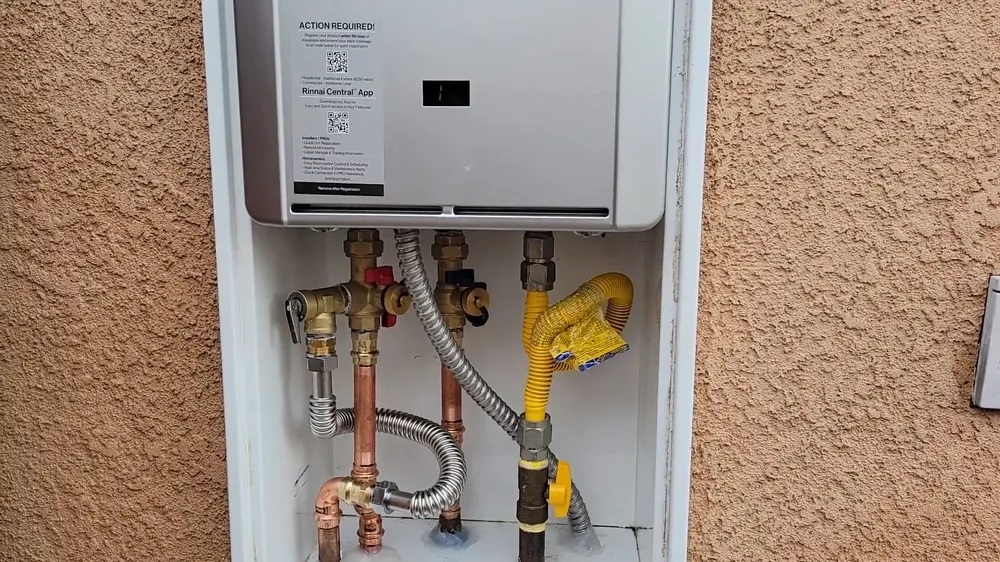
Gas or electric: which one fits the house
Most of the decision comes down to what the house already has. A gas unit needs a gas line large enough to feed a high-output burner, a flue or vent path out of the house, and a combustion air supply. An electric unit skips the venting but pulls heavy current, and an older panel may not have the room. A plumber can check the line, the vent route and the panel and name the model type that fits instead of the one that sounds appealing.
Replacement and conversion from a tank
Replacing a tankless unit with another is the easy case, since the vent, gas line and water connections are in place. Converting from a tank is a larger scope. The old tank comes out, the new unit goes on a wall, and the plumber reworks the water connections and often the gas line and the vent.
The original Levitt houses sit on a slab with no basement and use copper-piped radiant heat. That means a conversion plans around closets, utility corners or an exterior wall, so where the unit mounts and how it vents deserve attention at the start.
Thinking about a tankless conversion?
State what you have and what you want, and a plumber confirms the gas line, vent and space before the visit.
Call (833) 840-2034 Contact details ›Flushing, descaling and maintenance
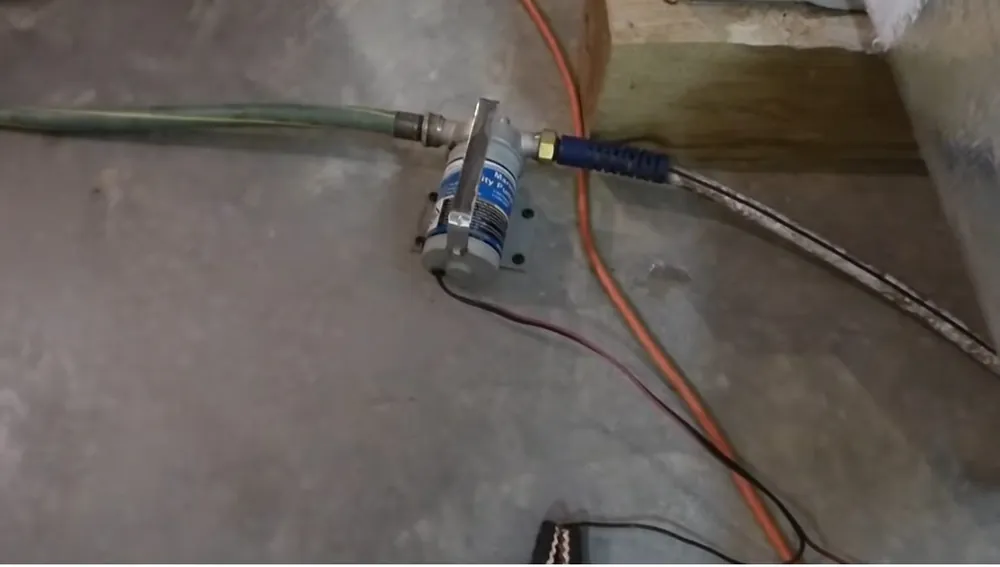
Minerals in the water coat the heat exchanger over time, and a coated exchanger heats less efficiently. The usual fix is a descaling flush: the plumber connects a pump through the isolation valves, circulates a descaling solution through the unit, and rinses it. A unit with isolation valves is easy to flush, which is why they belong in the install.
No hardness figure is published for the river and well supply that serves Levittown, so there is no number to quote for scale. If scale is a concern, ask your supplier for its current water quality report. A softener or filter can protect the unit, as the softener and filtration page explains.
Tankless or tank, and which brand?
A tankless unit saves space and removes the standby reserve, while a tank is simpler and lower in install cost. Brand matters less than correct sizing, a proper vent and a plumber who can service the model afterward. Pick a unit that a local plumber can get parts for.
- Count the fixtures that may run at once and size the flow to match
- Ask whether the plumber services the brand and can get parts
- Confirm the warranty terms in the manufacturer paperwork
- Plan for a flush at the interval the manual gives
Tankless water heater questions
Can my tank water heater be converted to a tankless unit?
Usually yes, but it is a bigger job than a like-for-like swap. A tankless gas unit often needs a larger gas line, a different vent and space on a wall instead of a floor. An electric unit may need heavy-gauge wiring and extra breaker capacity. A plumber checks the gas line size, the vent path and the panel before saying whether the conversion makes sense in your house.
Should I buy a gas or an electric tankless water heater?
Gas units deliver more hot water at once, so they suit larger households, but they need venting and sufficient gas supply. Electric units are simpler to vent and often fit smaller spaces, but they draw a lot of power and may demand an electrical upgrade. Where the house already has gas service and a flue path, gas is usually the more practical match. A plumber can read your meter, line and panel to decide.
What does a tankless water heater actually do?
It heats water only when a tap opens. Cold water passes through a heat exchanger, a burner or element warms it on the way, and the hot water leaves at the temperature you set. There is no stored tank, so a long shower never drains a reserve. The limit is flow: if too many fixtures open at once, the unit cannot keep up and the water runs cooler.
How does a tankless heater compare with a tank heater?
A tankless unit takes far less room and supplies hot water without a standby reserve. A tank is simpler, cheaper to install and easier to service. Tankless units need yearly descaling and sometimes a bigger gas line, while tanks need a floor space and eventually a replacement. Households with long showers and little space tend to lean tankless, and ones that want the simplest install tend to stay with a tank.
Book a tankless plumber
A single call starts the visit, whether the unit needs repair, a flush or a first install.
Call (833) 840-2034 Contact details ›- Licensed and insured plumbers
- Same-day service when available
- 24/7 emergency dispatch