
24/7 Emergency Line Open
Home › Services › Water Line Repair & Replacement
Main and Yard Water Lines | Repairs and Replacements for Homes in Levittown, PA
The line that brings water to the house is the one pipe you cannot see and the one you cannot shut off with a faucet. Plumbers sent from this line find where a main or yard line has failed, explain whether it can be repaired, and replace it when it should be.
Call (833) 840-2034- Licensed and insured plumbers
- Same-day service when available
- 24/7 emergency dispatch
Water line repair: finding the break first
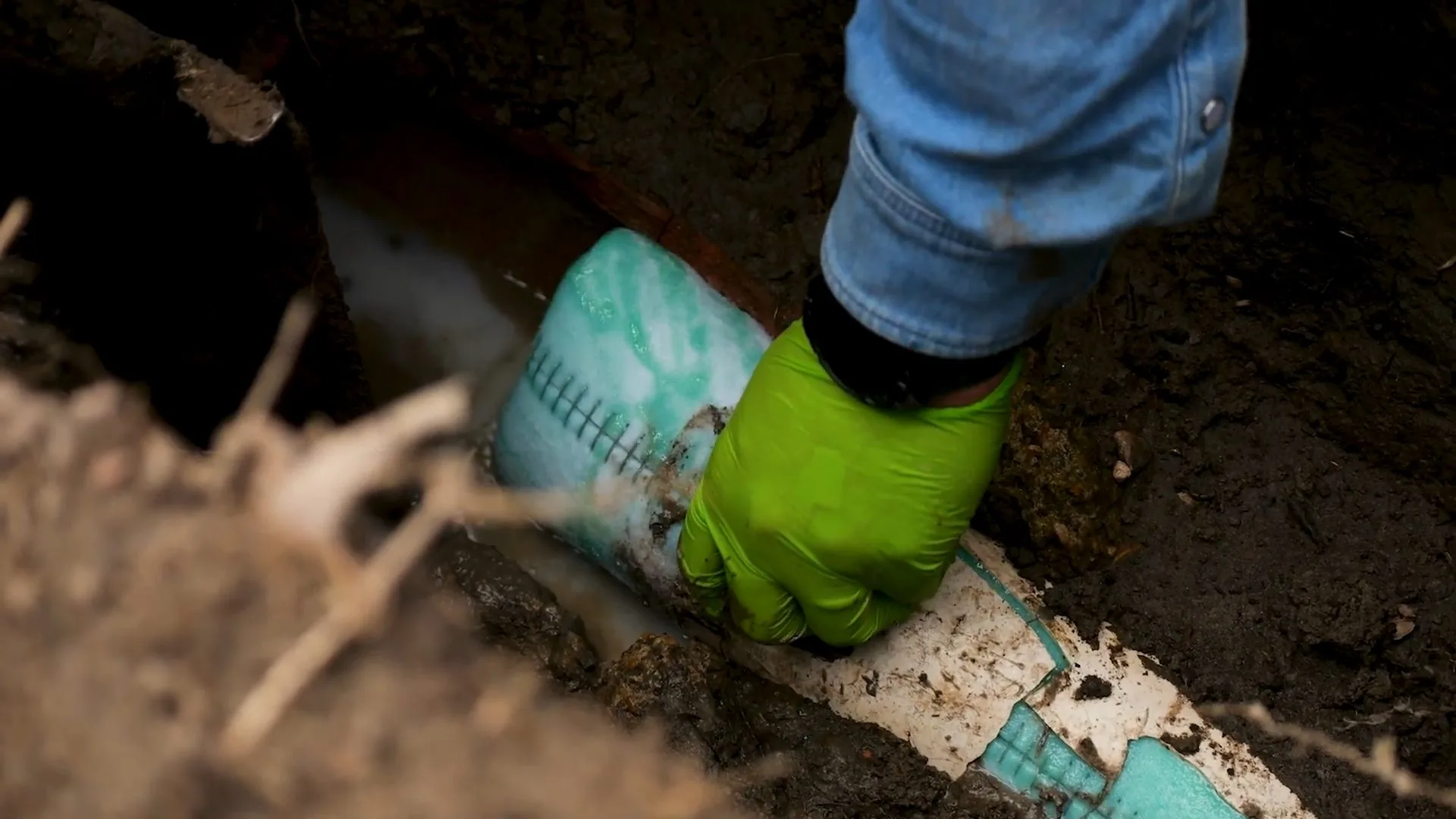
A buried line gives its trouble away indirectly. Pressure drops, the meter keeps moving, a patch of ground stays wet, or the bill rises with no reason. The first job is to confirm that the leak is on your side of the meter and then locate it.
- A meter dial that turns with every fixture closed
- A soft or sunken area over the path of the line
- Pressure that falls at every tap at once
- The sound of running water when the house is quiet
- A higher bill with no change in the household
- Mud or water at the foundation wall where the line enters
Once the break is located, the repair is a clean cut, new pipe and proper fittings. The page on locating a hidden leak describes how the plumber pins down a leak that does not show on the surface.
Water line replacement: when repair is not enough
A line that has leaked once in old pipe often leaks again a few feet away. Replacement makes sense when the pipe is old, when the same material has failed repeatedly, or when pressure is poor through the whole run. The work involves trenching or a trenchless pull, new pipe, new connections at the meter and the house, a pressure test and a flush before the water goes back on.
A property owner in Philadelphia, including Bustleton, owns the whole service line between the main and the house, and the repair must be done by a licensed plumber. Other townships set their own rules, so ask the local office about the line and the permit before the work is scheduled.
Suspect a leak in the main line?
Say what you see at the meter or in the yard, and the dispatcher books a plumber who finds the break.
Call (833) 840-2034 Contact details ›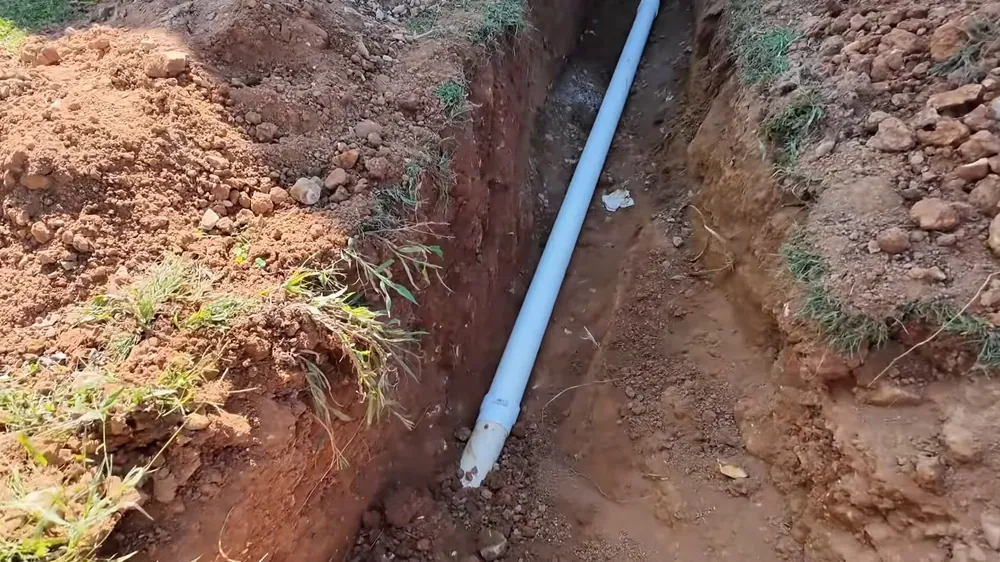
The service line from the street to the house
The yard line, also called the service line, runs from the utility connection near the street to the house. It is buried, so damage comes from age, shifting ground, tree roots and past digging. A plumber traces the path, checks the depth and confirms where it enters the building. Before digging starts, the plumber calls PA One Call at least three business days ahead so underground utilities get marked.
Pressure problems and the valves that control them
Pressure that is too high stresses every pipe and fixture in the house. Pressure that is too low means a failing line, a clogged fixture or a regulator problem. The parts that control it are worth knowing.
| Part | What it does | Sign of trouble |
|---|---|---|
| Pressure regulator (PRV) | Lowers street pressure to a safe level | Banging pipes, leaking fixtures, swings in pressure |
| Main shutoff valve | Closes the whole house supply | Handle stuck, drips at the stem |
| Water meter | Measures what comes into the house | Dial moves with everything off |
| Service line | Carries water from the street to the house | Low pressure, wet ground, high bills |
| Pressure test gauge | Shows static pressure at a hose bib | Reading far above or below normal |
High water pressure can wear out a water heater, a toilet valve and a washing machine hose long before their time. A plumber reads the pressure with a gauge before suggesting a regulator.
Shutoff valves, meters and testing the line
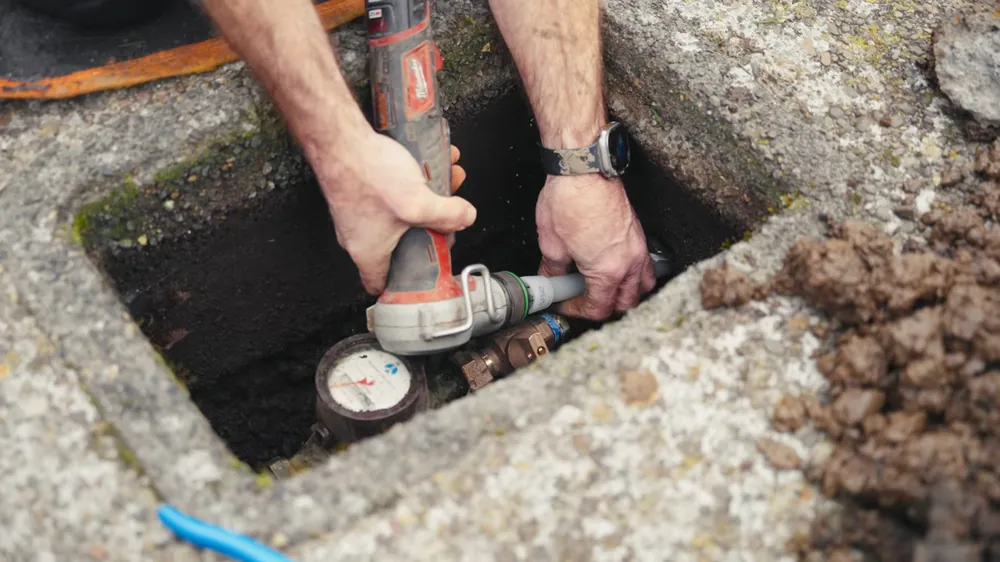
A shutoff valve that will not close is a problem waiting for a bad day. The main valve is the one that matters in an emergency, so it should turn easily and stop the flow. If it sticks or leaks, a plumber replaces it, sometimes after the utility closes the supply at the street.
Valve failures cluster around age and disuse. A valve that has not been turned in years can seize, and forcing it can snap the stem. Exercise the main valve once or twice a year so it still works on the day it is needed, and tag it so everyone in the house knows where it is.
After any repair or replacement, the line is pressure tested to confirm that it holds. The plumber closes the line, raises the pressure and watches the gauge for a drop. A line that holds without loss is ready for service.
Water line needs attention?
Describe what the meter and the pressure are doing, and a plumber confirms the problem before any digging.
Call (833) 840-2034 Contact details ›What to do before the plumber arrives
If you suspect a break in the main line, a few steps limit the damage and speed the visit.
- Close the main shutoff inside the house if it moves freely.
- Check the meter with every fixture off and note whether it turns.
- Keep people and pets off any soft or sunken ground over the line.
- Photograph wet areas and the meter reading.
- Call the dispatcher and describe the pressure and the meter.
Water line questions
How do I know if my buried water line is leaking?
Common signs are a wet or sunken patch in the yard when it has not rained, a bill that keeps rising while use stays the same, low pressure, and a water meter that keeps turning with every fixture off. Close the house valves, then watch the meter. If it still moves, water is escaping somewhere between the meter and the house. A plumber confirms the spot before anyone digs.
What does replacing a water main involve?
The plumber locates the old line, shuts the supply, and either digs a trench to lay new pipe or pulls a new line through the old path with a trenchless method where the layout allows it. New pipe is connected at the meter and at the house, pressure tested and flushed. Utilities are marked first, and a locate request is made through PA One Call before any digging starts.
What should I do about a leaking main water valve?
A valve that drips at the stem or the connection can often be repaired with a new packing or seal, but an old valve that will not close fully is better replaced. Because this valve is what shuts off the whole house, a plumber may need the utility to turn off the supply at the street before the work begins. Keep the area dry and do not force a stuck handle.
Get the water line repaired
Booking takes one call, and a plumber finds, repairs or replaces the line.
Call (833) 840-2034 Contact details ›- Licensed and insured plumbers
- Same-day service when available
- 24/7 emergency dispatch