
24/7 Emergency Line Open
Home › Services › Water Heater Repair
Water Heater Repair | Gas and Electric Tanks Fixed in Levittown, PA
A shower that runs cold, a tank that drips onto the floor and a pilot that will not stay lit are three different problems with three different fixes. Plumbers sent from this line test the heater first, name the failed part, and tell you whether it is worth repairing.
Call (833) 840-2034- Licensed and insured plumbers
- Same-day service when available
- 24/7 emergency dispatch
No hot water, or not enough: start here
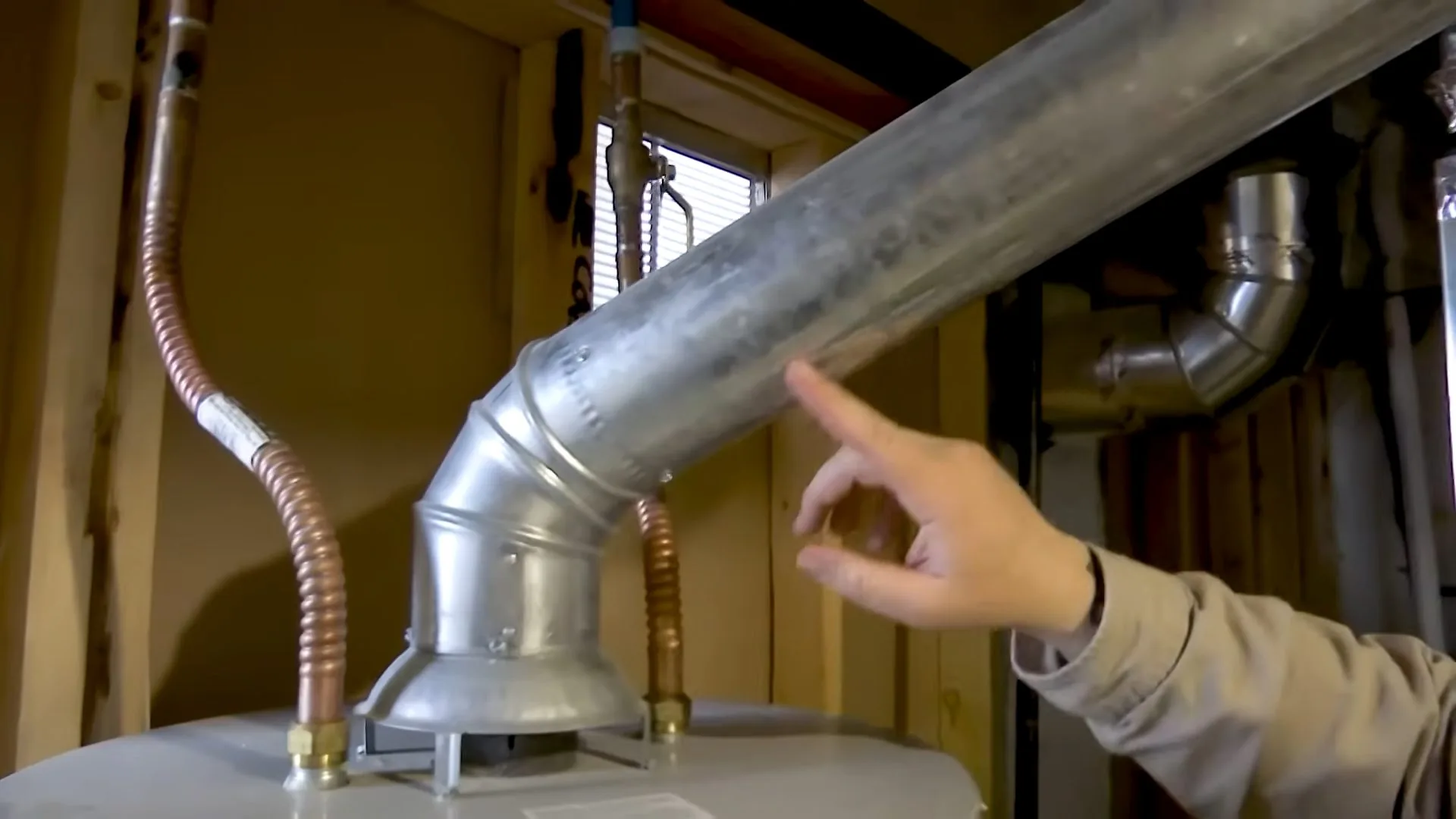
When the hot water goes, the cause is usually one of a few parts, and the symptoms point to which. A short check before the plumber arrives can save time, and it can also tell you whether the problem is the heater at all.
| What you notice | Gas heater cause | Electric heater cause |
|---|---|---|
| No hot water at all | Pilot out, failed thermocouple or gas valve | Tripped breaker, failed thermostat or upper element |
| Water warm but not hot | Dirty burner, failing thermocouple | Failed lower element or thermostat setting |
| Hot water runs out fast | Sediment covering the tank bottom | A failed element, or sediment around the elements |
| Popping or rumbling noise | Scale on the burner side of the tank | Scale on the elements |
| Rotten egg smell from hot taps | Bacteria reacting in the tank, or a gas smell to treat as a leak | Bacteria reacting in the tank |
A leaking tank: what it means and what to do
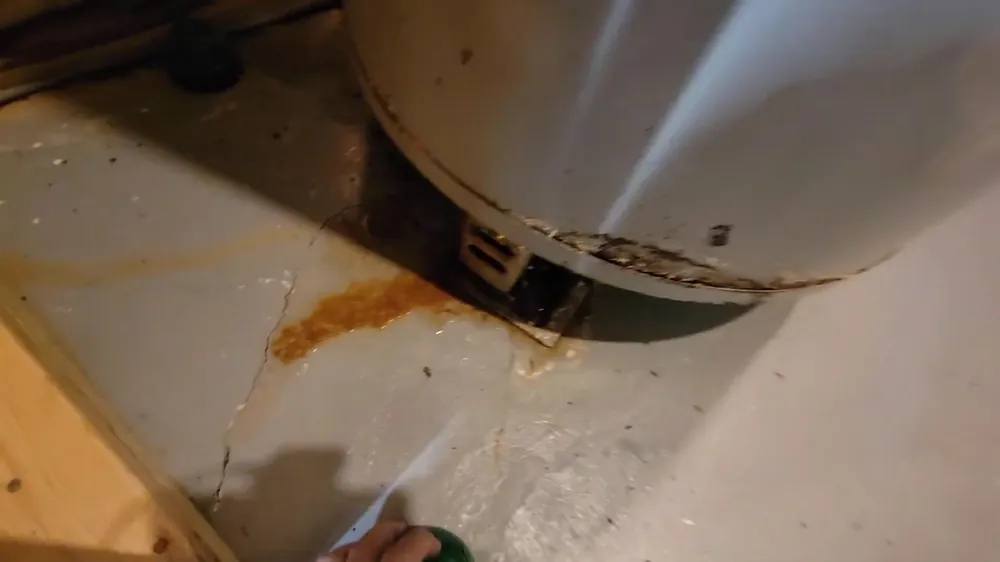
Leaking tank versus leaking fitting is the first thing a plumber settles. A puddle around the base of the unit, or a leak around the unit that returns after drying, is the usual sign. A leak at a fitting, a relief valve or a drain valve is often repairable. A leak from the tank body is not. Water that weeps from the seam or pools under the tank means the steel lining has failed, and no part replacement will fix it.
The first move is the same for a fitting leak and a tank leak. Cut power to the unit, or shut the gas valve on it, then close the cold inlet valve above the tank and catch any runoff in a bucket. Then call. A plumber can tell in minutes whether the leak is a fitting or the tank, which decides everything that follows. A leaking tank is urgent, so the first plumber open that day is offered to you. When the tank is the leak, the page on replacing the whole unit explains what a new unit involves.
If water has already reached the floor or the walls, the wet materials need attention too, and the water damage drying page explains the drying steps. A heater in a closet or finished space deserves a drain pan and a quick look each season.
Tank leaking or no hot water?
Turn off the heater, close the inlet valve and call. The dispatcher books a plumber and tells you what to leave alone.
Call (833) 840-2034 Contact details ›Gas or electric: what fails and what a plumber checks
The two kinds of heater share a tank but heat the water differently, so they fail in different places. A plumber who knows which you own can bring the right parts and fix it in one visit.
Gas units rely on a burner, a pilot or electronic igniter, a thermocouple that proves the flame is lit and a gas control valve. Most no-hot-water calls on gas units end at the pilot, the thermocouple or the igniter. The plumber checks the flame color and shape, the venting and the draft, since poor venting is both a performance and a safety issue.
Electric units use heating elements, thermostats and a high-limit safety switch. A tripped breaker is the first check. After that comes the thermostat, then the upper and lower elements, tested with a meter. The plumber swaps whichever has failed, and drains the tank first if an element has to come out.
- Gas: pilot, igniter, thermocouple, gas control valve, venting and draft
- Electric: breaker, thermostat, upper and lower elements, high-limit switch
- Both: relief valve, anode rod, dip tube, drain valve and expansion tank
Flushing sediment and keeping the tank healthy
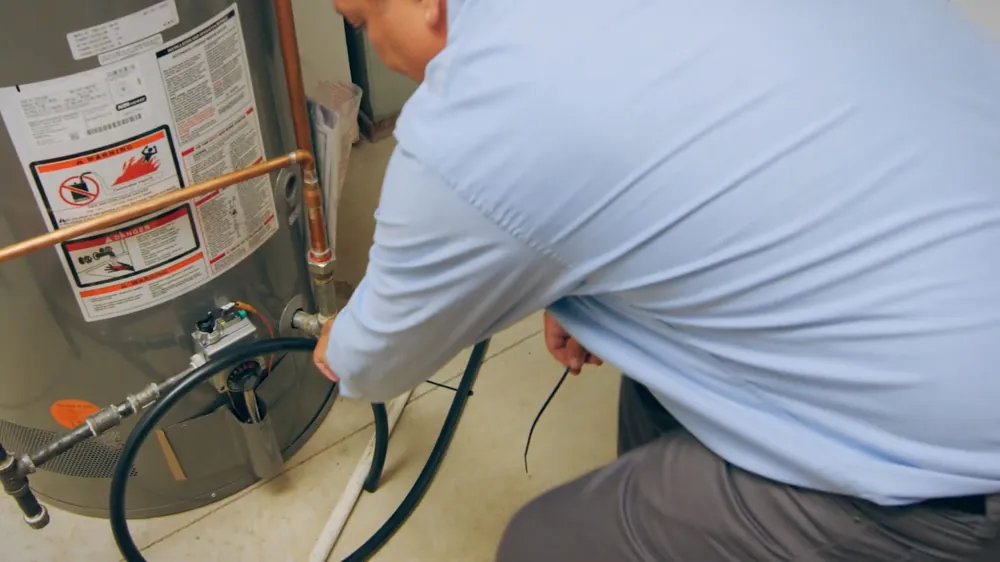
Sediment settles at the bottom of any tank and acts like a blanket between the burner and the water. A yearly flush draws it out. The plumber connects a hose to the drain valve, runs the tank until the water is clear, and checks the anode rod while the tank is quiet. A rod eaten down to the wire is an early warning that the tank is next. If your system has an expansion tank, its air charge deserves a check at the same visit.
Small signs worth reporting
Several symptoms are minor on their own but useful to mention when you call. A rumbling or popping sound usually means scale. A pilot that burns yellow instead of blue suggests a combustion issue and should be looked at promptly. Water that is lukewarm after a shower or two means the lower element or the dip tube may be failing. And a heater that cycles on and off without a call for hot water can point to a leaking valve or a failing thermostat.
None of these needs a middle-of-the-night call unless they come with a leak or a gas smell, but each is easier to deal with early than after it fails.
Hot water that will not stay hot
Call and describe what the heater is doing. The dispatcher matches you with a plumber who carries the likely parts.
Call (833) 840-2034 Contact details ›Original Levitt homes that heat with a boiler
This section is for owners of original Levitt houses. Courier Times reporting describes them as slab homes with radiant heat in copper pipe. A house with that original system has a boiler and a floor loop, and both are separate from the heater that supplies your taps.
A plumber can tell the two apart in a moment. If the floors are cold and the water at the faucets is hot, the boiler side is the question. If the taps run cold and the floors are warm, the water heater is. Say which, and say that your house is an original Levitt, so the right plumber is sent. Leaks in a floor loop are hard to see for the reasons explained on the page about leaks under the slab.
Source: Bucks County Courier Times via AOL.
Water source, permits and who to ask
The Lower Bucks County Joint Municipal Authority supplies water in the Levittown area from Delaware River surface water and wells, according to the Bucks County Water and Sewer Authority consumer report. The report does not give a hardness figure for that supplier alone, so ask your supplier for its current report before deciding whether scale is a concern at your address.
Permits depend on where you are. Philadelphia, Bustleton included, requires a plumbing permit and a signed certification form for a replacement heater, and a minor repair such as stopping a leak needs neither. For Bristol Township or Bensalem, ask the Building and Planning office whether your job needs one. Repairing a failed part is generally a different question from replacing the unit, and the plumber will tell you which you have.
Source: Philadelphia L&I plumbing permits; Bucks County Water and Sewer Authority report.
Water heater questions, answered
Who fixes water heaters in Levittown?
A plumber does, whether the unit runs on gas or electricity. The dispatch line sends licensed and insured plumbers who can test the thermostat, element, igniter and gas valve, and replace a failed part when the tank is sound. If the tank itself has rusted through, the repair question turns into a replacement question, and the plumber will say so after looking.
How long should a tank water heater last, and does hard water shorten it?
Most tank units serve for roughly a decade, sometimes more with good care. Mineral buildup from the water supply collects at the bottom of the tank and forces the burner or elements to work harder, which wears them faster. Flushing the tank once a year removes much of it. Water quality varies by supplier, so ask yours for its yearly report.
My pilot light went out. Is it safe to relight it?
Many gas units have a relighting procedure printed on the label, and following it exactly is reasonable if you smell no gas. If you smell gas, get everyone out and phone 911 or the gas utility once you are clear of the house, and do not try to relight anything. A pilot that keeps going out points to a failing thermocouple or a draft problem, and that needs a plumber.
How long does a water heater repair take?
A simple part swap, such as a thermostat, an element or a thermocouple, is often done within one visit. A leak from the tank is not repairable, so the visit turns into a replacement discussion. The plumber diagnoses first and tells you what the repair involves before starting it.
Is it better to repair an older water heater or replace it?
Repair makes sense when a single part has failed and the tank is not leaking or heavily corroded. Replacement is the better choice when the tank leaks, when repairs have piled up, or when the unit is near the end of its expected life. The plumber should show you the evidence for either choice, and explain what replacement involves.
Get hot water back on
Name what the heater is doing when you call, and a plumber heads out once one is open.
Call (833) 840-2034 Contact details ›- Licensed and insured plumbers
- Same-day service when available
- 24/7 emergency dispatch